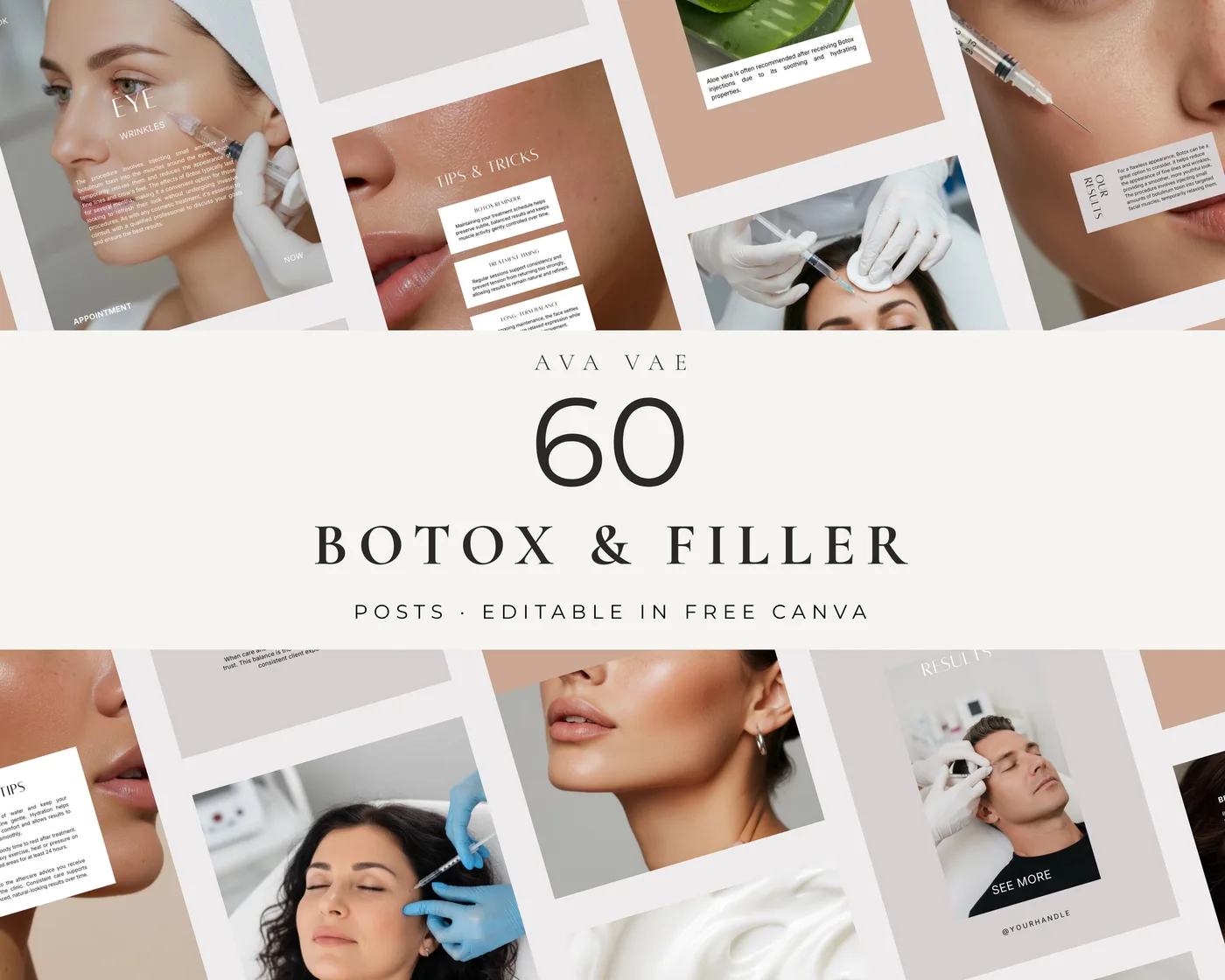
Med spa marketing has a specific kind of stuck. You know the before and after that would fill next week, and you are not sure you are allowed to post it. So you post nothing, or you post the same neutral quote card as every other clinic in your zip code, and your feed ends up looking exactly like the one down the street. Meanwhile the practices that stay booked are not doing anything you cannot do. They have a compliant way to show results, a menu people can actually read, a face attached to the treatment, and a review habit that runs without them. Below are the ten strategies that do the work, each with something you can start this week.
What is in this guide
- Post before and afters the compliant way
- Turn your treatment menu into a post series
- Introduce the injector, not just the injectable
- Build a review request system, not a review habit
- Finish your Google Business Profile
- Plan promotions a month at a time
- Put a referral card in every hand
- Email the clients you already have
- Make Reels that never show a face
- Lock one brand board and use it everywhere
- What to post in your first 30 days
- Med spa marketing questions, answered
1. Post before and afters the compliant way
This is the most persuasive content in aesthetics and the most avoided, because the rules feel murky. They are not murky, they are specific. You need written marketing consent that names where the image may appear and how a client withdraws it. You need two frames shot the same way, same light, same angle, same distance, no change of makeup, no filter, no smoothing. And you need a caption that states the timeframe, the number of sessions and what was actually done, in plain language, with nothing that reads as a promise about what anyone else will get.
Your state board and the platform both have a say, and they do not always say the same thing, so read your board rules once and write your own house rules on a single page. After that, before and after med spa content stops being a monthly agony and becomes a format you can repeat.
Do this week. Write a one page consent form, tape a marker on the floor where the client stands, and shoot one pair under the same lamp at the same distance.
Example. A two frame post captioned “One syringe of lip filler, photographed at three weeks, unedited, results vary from person to person,” with the signed consent on file.
Avoid. Posting a pair where the lighting or the makeup changed, because that is the version that reads as a sales trick and invites a complaint.
2. Turn your treatment menu into a post series
People search for a med spa menu constantly and almost nobody publishes one that is easy to read. A menu buried in a booking system, or flattened into a screenshot of a spreadsheet, does not get saved. And saving is the behavior that brings her back at eleven at night when she finally decides.
So break the menu apart. One post per treatment instead of one crowded price sheet. Each post carries the treatment name, one sentence on what it is for, how long the appointment takes, what the day after looks like, and the starting price. Nine treatments becomes nine posts, which is a month of content that also answers the questions your front desk repeats all day long.
Do this week. List your five most booked treatments and write those four lines for each one.
Example. A card that reads “Consultation, 30 minutes, complimentary, no pressure to book anything,” pinned to the top of your grid.
Avoid. Hiding prices completely. The follower who cannot find a single number assumes the answer is too expensive and leaves quietly.
3. Introduce the injector, not just the injectable
She is not choosing a treatment. She is choosing who she lets near her face. Provider content outperforms promotional content for exactly that reason, and it is the easiest content you own, because it needs no consent forms and makes no claims.
Give every provider a real introduction post. Credentials, years in practice, the treatments they focus on, why they moved into aesthetics, and one human detail that makes them a person rather than a title. Then keep them visible in stories so the introduction is not a single event in your archive.
Do this week. Photograph each provider against the same wall in the same light, and write their four sentences.
Example. “Meet Dana, RN. Nine years in nursing, four in aesthetics, focused on natural lip work and injectables for first timers. Drinks her coffee cold by accident every single day.”
Avoid. A stock photo of a woman in a lab coat who does not work at your practice. It is the fastest way to lose the trust the rest of your feed just built.
4. Build a review request system, not a review habit
Reviews decide more bookings in aesthetics than any single post you will ever make, and the asking cannot depend on remembering. Systems ask. People forget, especially on the days that go well.
Pick the one moment when clients are happiest, usually the two week follow up, and attach the request to it permanently. A code on the checkout counter, a card in the hand, a short message sent the same afternoon by the same person every time. Ask about the experience rather than the outcome. A review about how carefully she was treated is both safer and more convincing than one that promises a result.
Do this week. Print one QR code that points to your Google review page, and decide who asks and when.
Example. A text at four in the afternoon on follow up day. “So glad you love it. If you have a minute, would you tell people how the visit felt?” with the link underneath.
Avoid. Offering a discount in exchange for a review. It breaks platform policy and can cost you the reviews you already earned.
5. Finish your Google Business Profile
Most of the people looking for you are typing “med spa near me” into Google, not scrolling Instagram. The map pack is the highest intent surface in this business, and it costs nothing but an afternoon.
Complete every field. Category, full service list with starting prices, hours including holidays, booking link, service area, and at least twenty photos of your actual space and team instead of stock. Add treatments as individual services so they match the words people type. Answer the questions in the question box yourself, and reply to every review within a few days, warmly and briefly, without confirming anything about a specific person that your privacy obligations would not allow.
Do this week. Add the full service list with starting prices, and upload fifteen real photos of the rooms and the team.
Example. A short Google post every Monday that mirrors your Instagram post, which keeps the listing active without creating new work.
Avoid. Stuffing keywords into your business name. It gets listings suspended, and the recovery takes longer than the ranking was ever worth.
6. Plan promotions a month at a time
Discounting on impulse teaches people to wait for the next quiet week. A calendar does the opposite. It gives her a reason to book now that you chose calmly, weeks in advance, instead of on the Tuesday the schedule looked empty.
Give each month one offer with a real reason and a real end date. The seasons do most of the work, a spring skin reset, a September back to routine, a November gift card push, a January membership opening. Keep the discount modest and the deadline firm. Announce it three times, at the start, in the middle and on the final day, because most of the bookings arrive in the last forty eight hours.
Do this week. Write the next three months of offers into one calendar so you never improvise a discount again.
Example. “Ten complimentary skin consults this month, booked by the 28th,” which fills the schedule without discounting a treatment.
Avoid. The permanent sale. A practice that is always discounted reads as a practice nobody books at full price.
7. Put a referral card in every hand
Your best clients already recommend you at dinner. They simply have nothing to hand over, so the recommendation dissolves somewhere between the table and the parking lot.
Give them the object. A small card with the practice name, what the friend gets, what she gets, and one way to book. Hand it over at checkout with one sentence, and that sentence is the whole system. Put a code on the back so you can see it working. Rules on rewarding referrals differ for medical services, so check what your state allows before you set the amounts.
Do this week. Design one card, print fifty, and put the stack at checkout where it cannot be forgotten.
Example. “Give a friend 25 dollars off her first visit, and take 25 off yours,” with a tracking code on the reverse.
Avoid. A referral program that lives only in your Instagram bio. The moment of recommendation happens offline, and it needs something physical to survive.
8. Email the clients you already have
Aesthetics runs on cycles. Treatments soften, skin plans have a next step, and the client who adored you in March is genuinely not thinking about you in June. Email is the only channel where you decide when she hears from you.
Collect addresses properly, with permission, and send one short email a month. The best performing email is not a promotion, it is a reminder. “It has been about four months since your last visit, and here is what is open next week.” Add one seasonal note and one link to book. That is the entire program, and it beats most paid advertising in this industry.
Do this week. Pull everyone who visited between three and six months ago, and write them one email.
Example. Subject line “Your usual time is open Thursday,” sent Tuesday morning, which lands as a booking prompt rather than an ad.
Avoid. Naming treatments or anything personal in a subject line someone might read over her shoulder, and keep your list handling in line with your privacy obligations.
9. Make Reels that never show a face
Reels are how strangers find a med spa now, and the two reasons practices skip them are that nobody on the team wants to be on camera, and clients cannot be filmed. Neither one is actually required.
Film hands, tools, textures and the room. A tray being laid out. A bottle set down on stone. The door opening into morning light. Numbing cream going onto the back of a hand rather than a face. Put one line of text on screen that answers a question you get asked out loud, and let the sound carry the mood. Faceless content also removes the consent problem entirely, because there is nobody in the frame to consent. If you want the full format list, the faceless Reels guide goes deeper.
Do this week. Shoot ten seconds of your prep tray and post it with one question as the caption.
Example. A seven second clip of a treatment room being reset, captioned “What the room looks like before every single appointment.”
Avoid. Trending audio that fights the calm you are selling. A chaotic Reel quietly undoes the composure your brand depends on.
10. Lock one brand board and use it everywhere
The reason your feed looks like every other clinic is not your photography. It is that every post was designed from scratch, so nothing ever repeats, and repetition is the only thing that makes a brand recognizable in a scroll.
Decide once and stop deciding. Two fonts, four colors, one photo treatment, one layout for education and one for offers. Put it on a single page and apply it to everything, feed, stories, menu cards, review requests, the sign at the front desk. Practices that look expensive are rarely spending more. They are repeating themselves on purpose.
Do this week. Choose two fonts and four colors, put them on one page, then rebuild your next three posts from it.
Example. Every educational post on the same soft background, with the same serif headline and the same corner mark, so followers recognize you before they read a word.
Avoid. Chasing an aesthetic that does not match your rooms. A feed that promises one thing and a space that delivers another is a small broken promise at the door.
What to post in your first 30 days
Three posts a week for four weeks. Nothing here needs permission except the one before and after, and nothing needs you on camera. In month two, repeat the pattern with the next three treatments.
| Week | Post 1 | Post 2 | Story or Reel |
|---|---|---|---|
| Week 1 | Provider introduction | Menu card, most booked treatment | Faceless Reel, the room being reset |
| Week 2 | Before and after, consent on file | Menu card, second treatment | Story, what a consultation includes |
| Week 3 | What to expect at a first visit | This month’s offer, announced | Faceless Reel, the prep tray |
| Week 4 | A client review as a quote card | Menu card, third treatment | Story, last call for the offer |
Med spa marketing questions, answered
How do you market a med spa?
Trust first, reach second. Publish a treatment menu people can read, introduce the providers by name, collect reviews on a system rather than a whim, finish your Google Business Profile, and post compliant before and afters alongside faceless Reels on a fixed weekly rhythm. Pick two of those and hold them for ninety days rather than starting all ten at once. Consistency is what reads as a serious practice.
Can injectors post before and after photos?
In most places yes, with written marketing consent, unedited images, matched lighting and angles, and no claim about what results anyone else can expect. Requirements differ by state board and by platform, and some treatments carry extra restrictions, so confirm your own rules and keep signed consent on file for every image you use. When a specific pair feels uncertain, post the process instead and let the consultation do the rest.
What should a med spa post on Instagram?
Four formats cover a full month. Menu posts that explain one treatment each, provider and behind the scenes content, compliant before and afters or process shots, and one offer with a deadline. Reels reach strangers, stories convert the people already following you, and menu posts get saved, which is what brings her back on the night she decides to book.
What should be on a med spa treatment menu?
Treatment name, one plain sentence on what it is for, appointment length, what the next day looks like, and a starting price. Group by concern rather than by product name, keep the consultation visible and say clearly whether it is free, and publish it somewhere it can be read on a phone without pinching to zoom.
Make it all look like one practice
Every strategy here moves faster when the design is already decided. Our Med Spa and Injector Instagram templates cover the menu cards, provider introductions, before and after layouts and offer announcements in one editable set, fully editable in the free version of Canva, no Canva Pro needed. The med spa Instagram post kit is the simplest starting point.
If you would rather start with the foundation, the free brand board template puts your colors, fonts and mood onto one page in a few minutes. It is the small piece that makes everything after it look intentional.
Here is to a feed that finally matches the work you do.
Ilse, founder of Ava Vae
Keep reading
Skincare
Esthetician Marketing: Content That Turns Followers Into Clients
Likes are lovely, bookings pay rent. A content system for estheticians: five pillars, daily stories, honest skincare education and one clear CTA.
Beauty
How to Price Your Salon Services (+ Free Price List Template)
Most salon prices were inherited, guessed or copied. A calm guide to pricing your services on purpose, raising them without panic, and presenting them beautifully.
Beauty
Faceless Reels for Beauty Businesses: Ideas That Don't Need Your Face
You can grow on reels without dancing, pointing or talking to a camera. The faceless formats that fit beauty work, with concrete ideas per niche.