Short answer: To start a lash business, get trained in lash extensions (and lash lifts if you want to offer them), find out which lash license your state asks for, choose where you will work (home studio, salon suite or a room in an existing salon), set up a clean, comfortable lash room, buy quality supplies, insure the business, set prices that cover your time and product, prepare your consent and aftercare paperwork, and book your first clients through Instagram, Google and referrals. Below is each step in the order that saves you money and stress.
Lashing is a business you can start small. You need one bed, good light, steady hands and a calendar that fills up. The lash techs who stay booked are rarely the ones with the most expensive tweezers. They are the ones who sorted out the license, the setup, the pricing and the marketing before their first paid set. This guide walks you through all of it.
Step 1: Learn the craft and how to become a lash tech
"How to become a lash tech" usually starts with a lash extension course. Beauty academies, lash brands and experienced trainers offer them online and in person. A good course covers:
- Eye and lash anatomy, and the natural lash growth cycle
- Isolation, placement and mapping for classic, hybrid and volume sets
- Adhesive handling, humidity and temperature
- Hygiene, sanitation and contraindications, including when not to lash someone
- Allergies, patch testing and what to do if a client reacts
- Aftercare and fills
A certificate from a course is not the same as a license, so read Step 2 before you book anything. And practice a lot on models before you charge full price. Every set you do on a friend teaches you something about speed, retention and comfort.
Step 2: Get your lash license (check your state first)
The lash license question is the one new lash techs ask most, and the honest answer is: it depends on where you live. In many US states lash extensions fall under cosmetology or esthetics, so you may need one of those licenses before you can lash for money. Some states have a specific eyelash extension license, and a few have few or no rules. Rules also change, so do not rely on a forum post or an old video.
Check three places before you spend money:
- Your state board of cosmetology: whether you need a lash tech license, an esthetics or cosmetology license, and which training hours count
- Your city or county: a general business license, and zoning rules if you want to work from home
- Your state tax office: a sales tax permit if you plan to sell aftercare products such as cleansers and brushes
Then choose a business structure. Many solo lash techs start as a sole proprietor or set up an LLC. A short call with an accountant will tell you what fits your situation.
Step 3: Choose where your lash business will live
Where you work decides your costs, your prices and how clients find you.
| Setup | Good for | Watch out for |
|---|---|---|
| Home studio | Low rent, flexible hours | Zoning, a separate clean room, privacy and parking |
| Salon suite | Your own brand and a professional look | Weekly or monthly rent from day one |
| Room or chair in an existing salon | Built in foot traffic and referrals | Commission or rent split, less control over hours |
Many lash techs start at home or in a shared salon, build a client list and move into a suite once their calendar is full. Whatever you pick, lash appointments are long, so the client needs to be comfortable lying still for a long time.
Step 4: Set up your lash room and supplies
You do not need everything on day one, but you do need the basics to be right:
- A lash bed or treatment bed that supports the neck, plus a pillow and blanket
- Good lighting, such as a lash lamp or ring light, so you can see isolation clearly
- A lash cart or trolley that keeps your tools within reach
- Lashes in the curls, lengths and thicknesses you were trained on
- Adhesive, primer, remover and a way to keep the room's humidity steady
- Tweezers for isolation and for classic or volume work
- Disposables: under eye pads, tape, micro swabs, mascara wands and glue rings
- Cleaning and disinfection supplies for tools and surfaces
- A booking and payment system that takes deposits, so no shows do not cost you hours
Buy from suppliers you trust and follow each product's instructions. Your training course can help you choose a starter list.
Step 5: Insure your lash business
Get insurance before your first paid client. Most beauty pros carry general liability (a client trips in your studio) and professional liability (a client says a set caused irritation or a reaction). Many beauty insurance providers offer policies for lash techs. Compare a few quotes and check that lash extensions, and lash lifts if you offer them, are covered by name.
Step 6: Set your prices and do the math
Start with your costs, not with the studio down the road. For each service, add up:
- The supplies you use per set
- Your time, including setup, cleanup and the consultation
- Your fixed monthly costs (rent, insurance, booking software) spread over the sets you do in a month
Then look at what lash techs in your area charge, and price full sets, fills and removals so each one is worth your time. New lash techs often discount too long. A model price while you learn is fine, but set a date to move to your real prices. Our guide on how to price salon services walks through the math step by step.
Step 7: Prepare your paperwork and policies
Paperwork protects you and your clients, and it makes you look professional from the first booking:
- A consent and intake form: health questions, allergies, sensitivities and a signature before every first set
- Booking policies: deposits, late arrivals, cancellations and how many lashes need to be left for a fill
- Aftercare instructions: what to do in the first hours, how to cleanse and when to book a fill
You can start with our copy ready lash extension aftercare instructions and adapt them to your adhesive, your training and your state rules.
Step 8: Market your lash business and book your first clients
Most lash clients find a lash tech through Instagram, Google or a friend. Make all three easy:
- Instagram: a clear bio with your city and booking link, close up photos of real sets in good light, and a steady mix of results, aftercare tips, open spots and reviews.
- Google: a Google Business Profile with your services, photos and reviews, so you show up when people nearby search for a lash tech.
- Referrals: ask happy clients for a review and give them a reason to send a friend.
- Print: a simple booking flyer at the front desk of a nail salon, gym or boutique nearby.
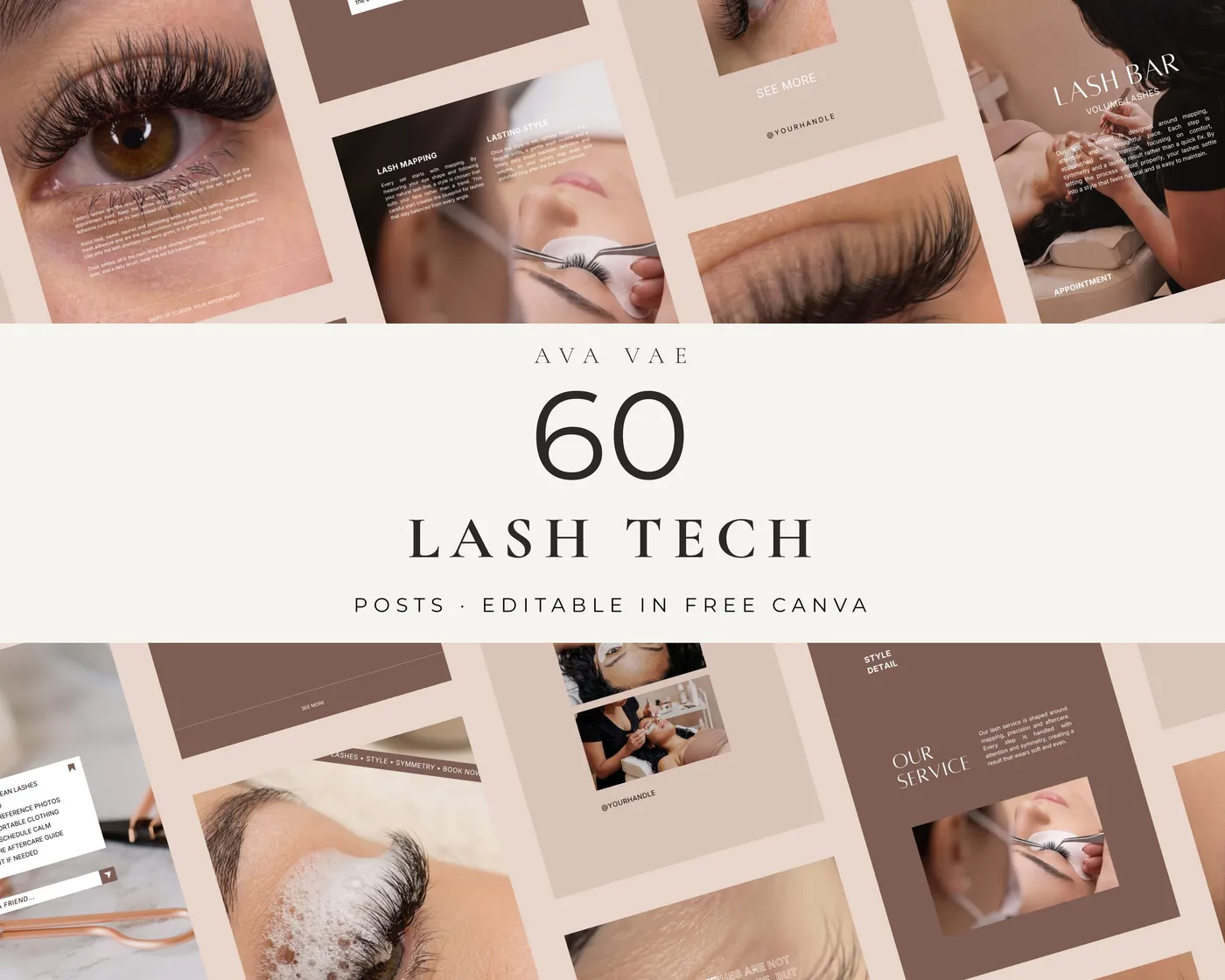
Consistency matters more than perfect content. If you want to save time, the Lash Instagram Bundle has ready made Canva posts and stories for sets, fills, open spots and aftercare, and the Lash Tech Booking Flyers are made for exactly that first round of local promotion. Both edit in the free version of Canva.
Your lash business checklist
- Training done and practice sets on models
- Lash license checked with your state board
- Business license, structure and tax permit sorted
- Lash room set up with bed, light, cart and supplies
- Insurance in place
- Prices calculated for full sets, fills and removals
- Consent form, policies and aftercare card ready
- Instagram, Google Business Profile and booking link live
Frequently asked questions
Do you need a license to start a lash business? In many US states you do, often a cosmetology or esthetics license, and some states have a specific lash license. Check with your state board of cosmetology before you take paying clients.
How do I become a lash tech? Take a lash extension course, practice on models, get the license your state asks for and set up your business paperwork and insurance before your first paid set.
Can I start a lash business from home? Often yes, if your state allows it and your city's zoning rules permit a home business. Some states also have rules for the room itself, so check both before you set up.
What do I need to start lashing? Training, the right license for your state, a lash bed, good lighting, lashes, adhesive, tweezers, disposables, cleaning supplies, insurance and a booking system.
How do I get my first lash clients? Start with friends and models, collect photos and reviews, set up your Instagram and Google Business Profile, and ask every happy client to refer a friend.
Build your lash brand from day one
Starting a lash business is mostly about doing the boring steps in the right order: training, license, setup, insurance, pricing and paperwork. Once those are done, your work and your marketing do the rest. Browse all lash tech Instagram templates to give your new lash business a consistent look from your very first post.
Ava
Shop the templates
Editable Canva lash Instagram templates to put these ideas to work tonight.
Lash Instagram Post Templates
$11.55· 3 styles
Sale price · regularly $16.50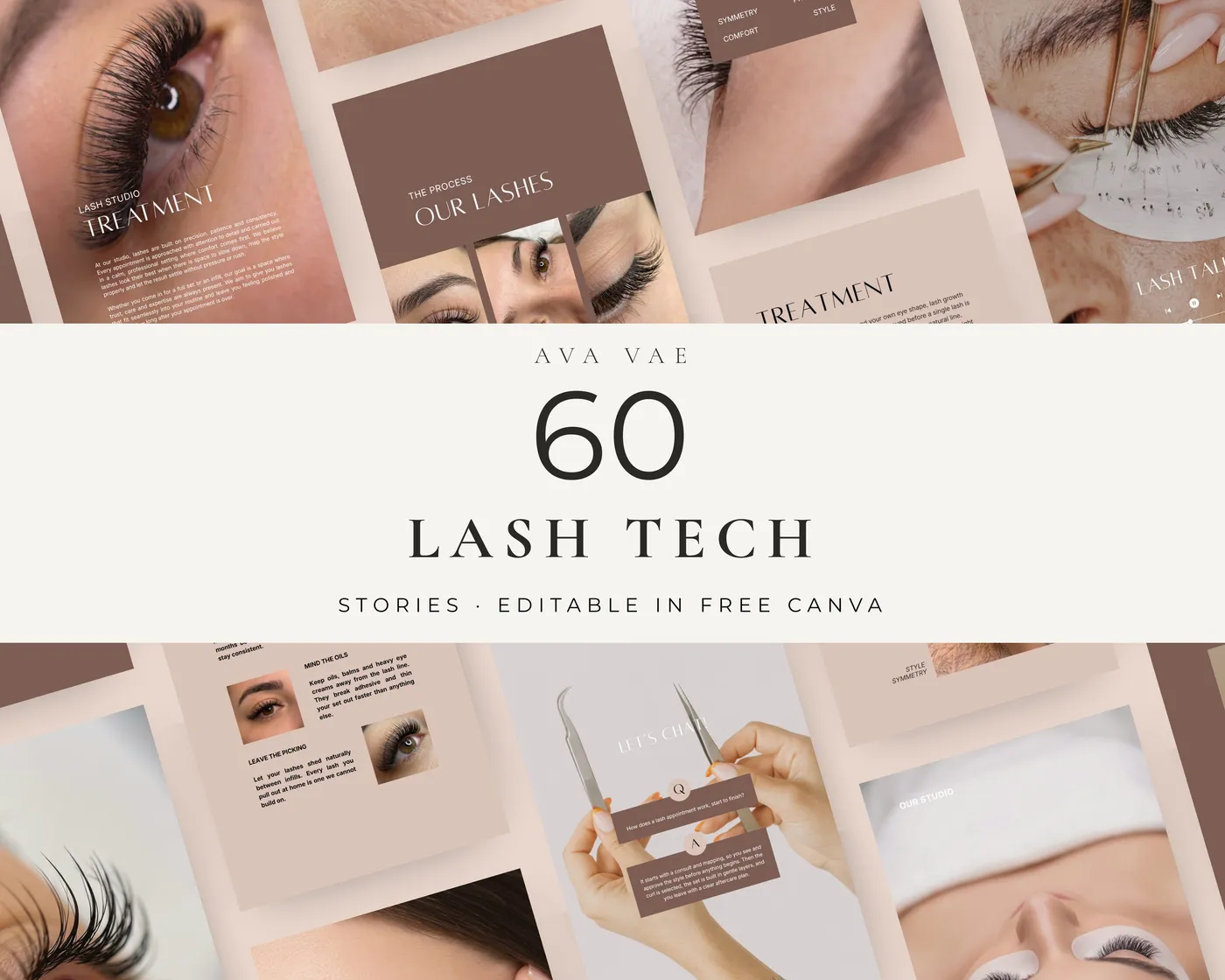
Lash Instagram Story Templates
$11.55· 3 styles
Sale price · regularly $16.50
Lash Instagram Reels Templates
$11.55· 3 styles
Sale price · regularly $16.50Browse all Lash templates.
Keep reading
Head Spa
Japanese Head Spa: The Ritual, the Steps and How to Offer It in Your Salon
Japanese head spa guide for head spa and scalp professionals: the ritual step by step, what makes it Japanese style, how to build, price and explain the treatment, and what to post on Instagram.
Brows
Henna Brows: What They Are, How Long They Last and How to Explain Them
Henna brows guide for brow artists: what brow henna is, how it differs from brow tint, how long henna brows last, patch tests, aftercare and how to show the service on Instagram.
Brows
Microblading Touch Up: Timing, What to Expect and How to Explain It
Microblading touch up guide for brow artists: when to book the perfecting session, what happens at the appointment, how to price it, yearly color boosts and how to remind clients on Instagram.